Keynote
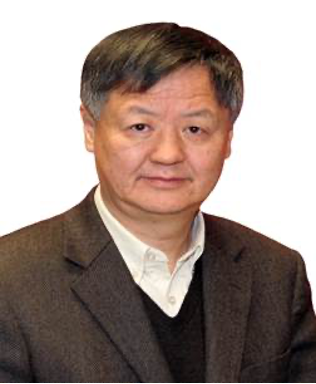
Jun Wang
City University of Hong Kong, Hong Kong SAR, China
Jun Wang is a Chair Professor of Computational Intelligence in the Department of Computer Science at City University of Hong Kong. Prior, he held various academic positions at Dalian University of Technology, Case Western Reserve University, University of North Dakota, and the Chinese University of Hong Kong. He also held various short-term visiting positions at USAF Armstrong Laboratory, RIKEN Brain Science Institute, Shanghai Jiao Tong University, and Huazhong University of Science and Technology. He received a B.S. degree and an M.S. degree from Dalian University of Technology and his Ph.D. degree from Case Western Reserve University. He is the Editor-in-Chief of the IEEE Transactions on Artificial Intelligence and was the Editor-in-Chief of the IEEE Transactions on Cybernetics. He is an IEEE Life Fellow, IAPR Fellow, and HKAE Fellow, and a foreign member of Academia Europaea. He is a recipient of the APNNA Outstanding Achievement Award, IEEE CIS Neural Networks Pioneer Award, CAAI Wu Wenjun AI Achievement Award, and IEEE SMCS Norbert Wiener Award, among other distinctions.
November 8, 8:50–9:30AM
Keynote Speech 1: Intelligent Information Processing via Collaborative Neurodynamic Optimization
The past four decades witnessed the birth and growth of neurodynamic optimization, which has emerged as a potentially powerful problem-solving tool for constrained optimization thanks to its inherent nature of biological plausibility and parallel and distributed information processing. In recent years, a hybrid intelligence framework called collaborative neurodynamic optimization was put forward for solving challenging optimization problems such as global optimization, combinatorial optimization, and mixed-integer optimization problems. Multiple recurrent neural networks are employed for the scattered searches of optimal solutions from different initial states, and a meta-heuristic rule is used to reinitialize neuronal states for repositioning the search for global optimal solutions.
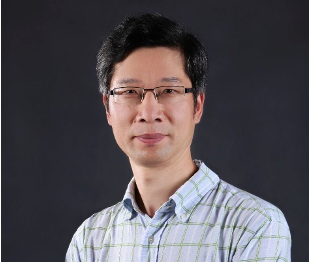
Xin Yao
Lingnan University, Hong Kong SAR, China
Xin Yao is the Vice President (Research and Innovation) and Tong Tin Sun Chair Professor of Machine Learning at Lingnan University, Hong Kong SAR, China. He is an IEEE Fellow and was a Distinguished Lecturer of the IEEE Computational Intelligence Society (CIS). He served as the President (2014-15) of IEEE CIS and the Editor-in-Chief (2003-08) of IEEE Transactions on Evolutionary Computation. His major research interests include evolutionary computation, neural network ensembles, and multi-objective learning. Recently, he has been working on trustworthy AI, especially on fair machine learning and explainable AI. His work won the 2001 IEEE Donald G. Fink Prize Paper Award; 2010, 2016 and 2017 IEEE Transactions on Evolutionary Computation Outstanding Paper Awards; 2011 IEEE Transactions on Neural Networks Outstanding Paper Award; 2010 BT Gordon Radley Award for Best Author of Innovation (Finalist); and many other best paper awards at conferences. He received the 2012 Royal Society Wolfson Research Merit Award, the 2013 IEEE CIS Evolutionary Computation Pioneer Award, and the 2020 IEEE Frank Rosenblatt Award.
November 8, 09:30-10:10AM
Keynote Speech 2: From Trustworthy Artificial Intelligence to Ethical Artificial Intelligence
Trustworthiness is a critical issue in artificial intelligence (AI), especially for real-world applications. It is impossible to apply AI in the real world without its being trustworthy. However, the connotation and extension of trustworthiness are not entirely clear to the scientific community. There has not been a single definition that is accepted by all researchers. Nevertheless, the vast majority of researchers agree that AI trustworthiness should include at least accuracy, reliability, robustness, safety, security, privacy, fairness, transparency, controllability, maintainability, etc. Firstly, this talk reviews very briefly AI ethics, which is closely related to AI trustworthiness. Secondly, the talk examines the fairness and explainability issues of machine learning models. It is argued that many aspects of trustworthiness, such as fairness and explainability, are inherently multidimensional. In other words, there are many dimensions to properties like fairness and explainability. They cannot be defined by any single numerical measures. Multi-objective thinking is needed. This talk advocates multi-objective evolutionary learning as an approach to enhancing AI trustworthiness. Fairness and explainability are used as two examples to demonstrate how multi-objective evolutionary learning can be used to improve fairness and explainability of learned models. Thirdly, the talk discusses more fundamental issues in the current research of AI explainability. Finally, the talk ends with some concluding remarks.
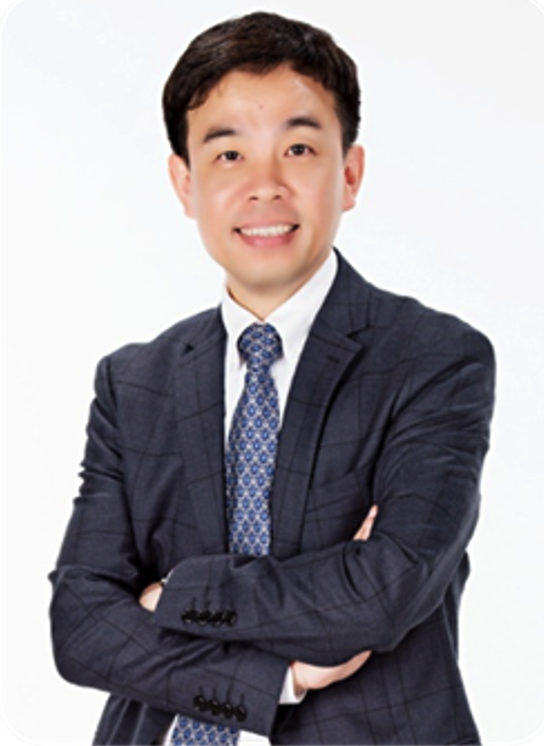
Yiu-ming Cheung
Hong Kong Baptist University, Hong Kong SAR, China
Yiu-ming Cheung is currently Chair Professor (Artificial Intelligence) in the Department of Computer Science, Dean of the Institute for Research and Continuing Education (IRACE), and Associate Director of the Institute of Computational and Theoretical Studies at Hong Kong Baptist University (HKBU). He received his PhD from the Department of Computer Science and Engineering at The Chinese University of Hong Kong. In recognition of his dedication and exceptional achievements, he has been elected a Member of the European Academy of Sciences and Arts (EASA), and a Fellow of IEEE, AAAS, IAPR, IET, and BCS. Besides, he has been elected a Distinguished Lecturer of the IEEE Computational Inte lligence Society and named Chair. Professor in the Changjiang Scholars Program by the Ministry of Education of the People’s Republic of China. Professor Cheung’s research interests include machine learning and visual computing, with applications in data science, pattern recognition, multi-objective optimization, and information security. He has published over 300 articles in leading conferences and journals, e.g., TPAMI, TNNLS, TIFS, TIP, TMM, TKDE, TCYB, CVPR, ICML, IJCAI, and AAAI. He is the recipient of: (1) 2023-2024 RGC Senior Research Fellow Award, (2) the President’s Award for Outstanding Performance in Scholarly Work (2023–2024), and (3) the 2023 APNNS Outstanding Achievement Award, among others. Furthermore, he has received several prestigious translational research awards, including: (1) the Gold Medal with Distinction (the highest grade in Gold Medals) and the Swiss Automobile Club Prize, at the 45th International Exhibition of Inventions of Geneva 2017, (2) the Gold Award at the Seventh Hong Kong Innovative Technologies Achievement Award in 2017, (3) the Gold Medal with Congratulations of Jury (the highest grade in Gold Medals) at the 46th International Exhibition of Inventions of Geneva 2018, and (4) the Gold Medal Award at the 15th International Invention Fair in the Middle East, held in Kuwait in February 2025. He is ranked among the World’s Top 2% Most-cited Scientists in Artificial Intelligence and Image Processing (actual ranking 0.28%) by Stanford University.
November 8, 10:30-11:10AM
Keynote Speech 3: Deep Learning, Model Compression, and Visual Recognition
Deep model, as a fundamental tool, has been successfully applied to a variety of real applications. However, from a practical perspective, the incredibly huge memory and computation cost of deep models poses a great challenge of deploying them on memory-constrained edge devices (e.g., mobile phones, drones). Accordingly, how to compress the deep model effectively, meanwhile keeping the performance as much as possible, is a big challenge. Besides that, a deep model often requires a large amount of balanced and annotated data. Unfortunately, real-world data are often unbalanced, typically exhibiting a long-tailed distribution in visual recognition, which refers to a small number of classes with abundant training samples but the remaining large number of classes only with very few training instances. Under the circumstances, the performance of deep learning models trained on long-tailed data declines sharply in the tail classes. However, tail classes cannot be ignored in various situations such as rare disease diagnosis, and anomaly detection. Subsequently, long-tailed data is still very challenging to deep learning. In this talk, we will introduce these two challenges, and then the research progress towards addressing these challenges is reviewed, including some representative methods in the literature.
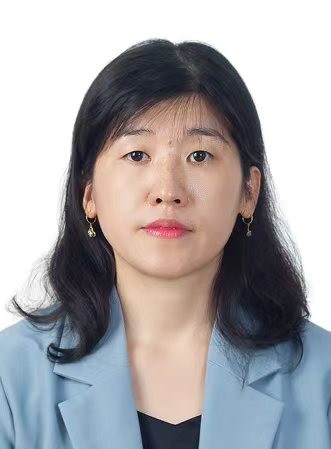
Pham Thi Thu Thuy
Nha Trang University, Vietnam
Dr. Pham Thi Thu Thuy is the Dean of the Faculty of Information Technology at Nha Trang University, Vietnam. She received her B.Eng. in Computer Technology from Hanoi University of Science and Technology (2001), and her M.Sc. (2006) and Ph.D. (2012) in Computer Engineering from Kyung Hee University, South Korea. Her research focuses on big data analytics, knowledge graphs, ontology-driven AI, explainable and trustworthy machine learning, and causal reasoning, with applications in healthcare analytics, customer churn prediction, digital education, and the blue economy. She is particularly interested in advancing hybrid neuro-symbolic AI systems that integrate machine learning, semantic technologies, and expert knowledge for transparent, robust, and ethical decision support. Dr. Thuy has published in reputable venues such as Knowledge-Based Systems, SN Computer Science, and Wireless Personal Communications, and has authored academic books on XML technologies and database systems. She has led national and international research projects and has an active portfolio of work involving ontology-based medical prediction, social network intelligence, AI-enhanced learning analytics, and intelligent aquaculture systems. Her recent contributions include ontology-enhanced diabetes risk prediction, explainable customer churn analytics using knowledge graphs, and causal-ontology frameworks for medical AI, demonstrating the role of semantics in improving model interpretability and reliability. Dr. Thuy is also actively driving digital transformation initiatives and capacity-building in AI and data scienc e across the education ecosystem in Vietnam.
November 8, 11:10-11:50AM
Keynote Speech 4: Integrating Ontological Semantics with Intelligent Systems: Toward Interpretable and Scalable Solutions in Health, Networks, and Collaboration Analytic
In today’s data-driven world, artificial intelligence (AI), machine learning (ML), and deep learning (DL) are increasingly powering real-time decision systems. Yet, many of these systems remain “black boxes,” limiting trust, interpretability, and adaptability. Ontological semantics - the use of structured domain knowledge and reasoning - offers a powerful pathway to address these challenges. This keynote will present a unified research agenda where ontology and intelligent systems converge to advance healthcare analytics, social network science, and academic collaboration forecasting.
- Healthcare Informatics.
- Social Network Analysis.
- Academic Collaboration Forecasting.
- Cross-Domain Integration.
- Conclusion.
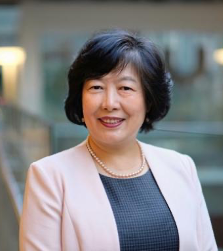
Jie Lu
University of Technology Sydney, Australia
Distinguished Professor Jie Lu is a world-renowned scientist in the field of computational intelligence, primarily known for her work in fuzzy transfer learning, concept drift, recommender systems, and decision support systems. She is an IEEE Fellow, IFSA Fellow, Australian Computer Society Fellow, Australian Laureate Fellow and Australian Industry Laureate Fellow. Professor Lu is the Director of the Australian Artificial Intelligence Institute (AAII) at University of Technology Sydney (UTS), Australia. She has published six research books and over 500 papers in leading journals and conferences; won 10 Australian Research Council (ARC) Discovery Projects and over 20 industry projects as leading chief investigator; and supervised 50PhD students to completion. Prof Lu serves as Editor-In-Chief for Knowledge-Based Systems and Internation-al Journal of Computational Intelligence Systems. She is a recognized keynote speaker, delivering over 40 keynote speech - es at international conferences. She is the recipient of three IEEE Transactions on Fuzzy Systems Outstanding Paper Awards (2019, 2022 and 2025), NeurIPS Outstanding Paper Award (2022), Australia's Most Innovative Engineer Award (2019), Australasian Artificial Intelligence Distinguished Research Contribution Award (2022), Australian NSW Premier's Prize on Excellence in Engineering or Information & Communication Technology (2023), and the Officer of the Order of Australia (AO) in the Aus tralia Day 2023.
November 9, 09:00-09:40AM
Keynote Speech 5: Fuzzy Machine Learning
The talk will present the concept, framework, methods, and algorithms of fuzzy machine learning and how the new techniques can effectively learn from data to support data-driven prediction and decision-making in uncertain, complex, and dynamic situations. It will firstly present classical fuzzy machine learning. It will then introduce the concepts and advanced methods of fuzzy transfer learning and fuzzy drift learning respectively. Finally, it will talk about the applications of fuzzy machine learning in practice.
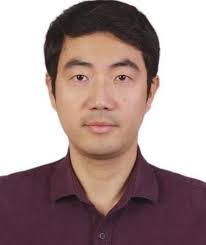
Huanhuan Chen
University of Science and Technology of China, China
Huanhuan Che, IEEE Fellow, is a Professor at the School of Computer Science, University of Science and Technology of China. He has published over 200 papers in prestigious journals and major conferences in the field of artificial intelligence. He is a recipient of the Wu Wenjun Artificial Intelligence Science and Technology Progress Award, the First Prize of Anhui Province Teaching Achievement Award, and the “Excellent Supervisor Award” of the Chinese Academy of Sciences. His research achievements have been recognized with multiple honors, including the Second Prize of the Ministry of Education Natural Science Award, the International Neural Network Society Young Scientist Award, the IEEE Transactions on Neural Networks Outstanding Paper Award, the IEEE Computational Intelligence Society Outstanding PhD Dissertation Award, and the British Computer Society Distinguished PhD Dissertation Award. As a principal investigator, he has led major national research projects such as the “Science and Technology Innovation 2030 – New Generation Artificial Intelligence” initiative, key projects under the National Key Research and Development Program, major program and key program grants from the National Natural Science Foundation of China, general program grants, and collaborative research projects with the Royal Society of the United Kingdom.
November 9, 09:40-10:20AM
Keynote Speech 6: Causal Learning and its Applications
In recent years, causal learning has gradually become a research hotspot in artificial intelligence. The talk introduces the content related to causal discovery, causal inference, and decision-making. It will provide an overview of the development progress and the latest technologies in this field. Through application cases in several scenarios, the talk will demonstrate the robustness and interpretability advantages of causal learning.
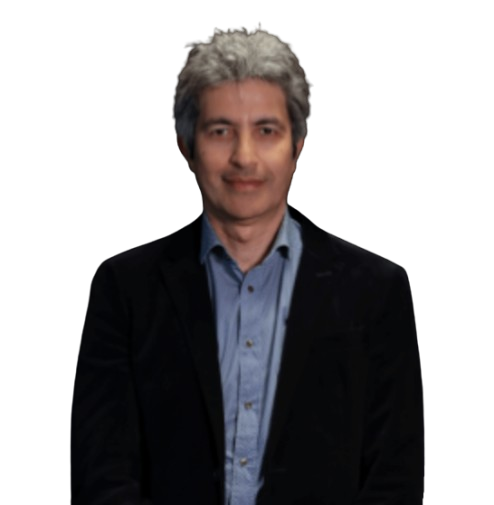
Mounir Ghogho
University Mohammed VI Polytechnic, Rabat Campus, Morocco
Mounir Ghogho received his PhD in Signal Processing from the National Polytechnic Institute of Toulouse, France, in 1997. He was a Research Fellow at the University of Strathclyde (Scotland) before joining the Univer sity of Leeds (England), where he became Full Professor and Head of the Signal Processing and Communications Group in 2008. In 2010, he joined the International University of Rabat as Founding Director of TICLab and Dean of the College of Doctoral Studies, while maintaining an affiliation with the university of Leeds. In March 2025, he joined the College of Computing at UM6P. His research focuses on machine learning and statistical signal processing, with applications in wireless communications, robotics, cybersecurity, and healthcare. He has published over 400 papers, supervised more than 50 PhD students, and led over 20 research projects funded by institutions such as the US Army Research Lab, EU Commission, NATO, USAID, IBM, Google, and The Academy Hassan II for Sciences and Techniques. He received the Royal Academy of Engineering Research Fellowship in 2000 and the IBM Faculty Award in 2013. He was elevated to IEEE Fellow in 2018, AAIA Fellow in 2021, and The World Academy of Sciences (TWAS) Fellow in 2024. He has served on editorial boards of leading journals, including IEEE Transactions on Signal Processing and IEEE Signal Processing Magazine, and is currently Subject Editor for Elsevier’s Signal Processing. He served as General Chair of several conferences including IEEE SPAWC 2010 and EUSIPCO 2013.
November 9, 10:50-11:30AM
Keynote Speech 7: On Efficient Inference for Edge AI
As AI systems increasingly shift from centralized cloud infrastructures to distributed edge devices, efficiency in computation, communication, and energy has become a key concern. This talk explores recent advances in efficient and adaptive inference, the art and science of enabling complex models to function under real-world constraints. I will discuss how techniques such as model compression, adaptive computation, and hardware algorithm co-design are reshaping the relationship between intelligence and computation. Beyond specific methods, adaptive inference raises deeper questions about how we balance accuracy, complexity, and autonomy when intelligence must operate with limited resources. The edge is not just a deployment setting; it is where AI must learn to adapt, prioritize, and th ink frugally.